Expert advice – how to secure a reliable pension as a business owner!
As a business owner, you are responsible for securing your own future pension – otherwise you risk ending up with far less than you might expect. Agneta Claesson from the Swedish Pensions Agency explains the rules and shares her best tips for those who want to avoid pitfalls and build a reliable pension as a self-employed person.
To secure a good pension later in life, it is important to start early and make informed decisions. Remember, there is help available that is both free of charge and impartial.
If you run your own business, you are personally responsible for many of the practical and financial matters that an employer would otherwise take care of. Your pension is one such example. Yet it’s common for questions about future retirement income to end up far down the to‑do list in an entrepreneur’s day‑to‑day life.
“This is understandable, but if you don’t actively make sure you are saving for your pension, you risk ending up with a significantly lower pension in the future than you would have received as an employee,” says Agneta Claesson, pensions specialist at the Swedish Pensions Agency. Let’s take a closer look at what she means.
State pension – the foundation
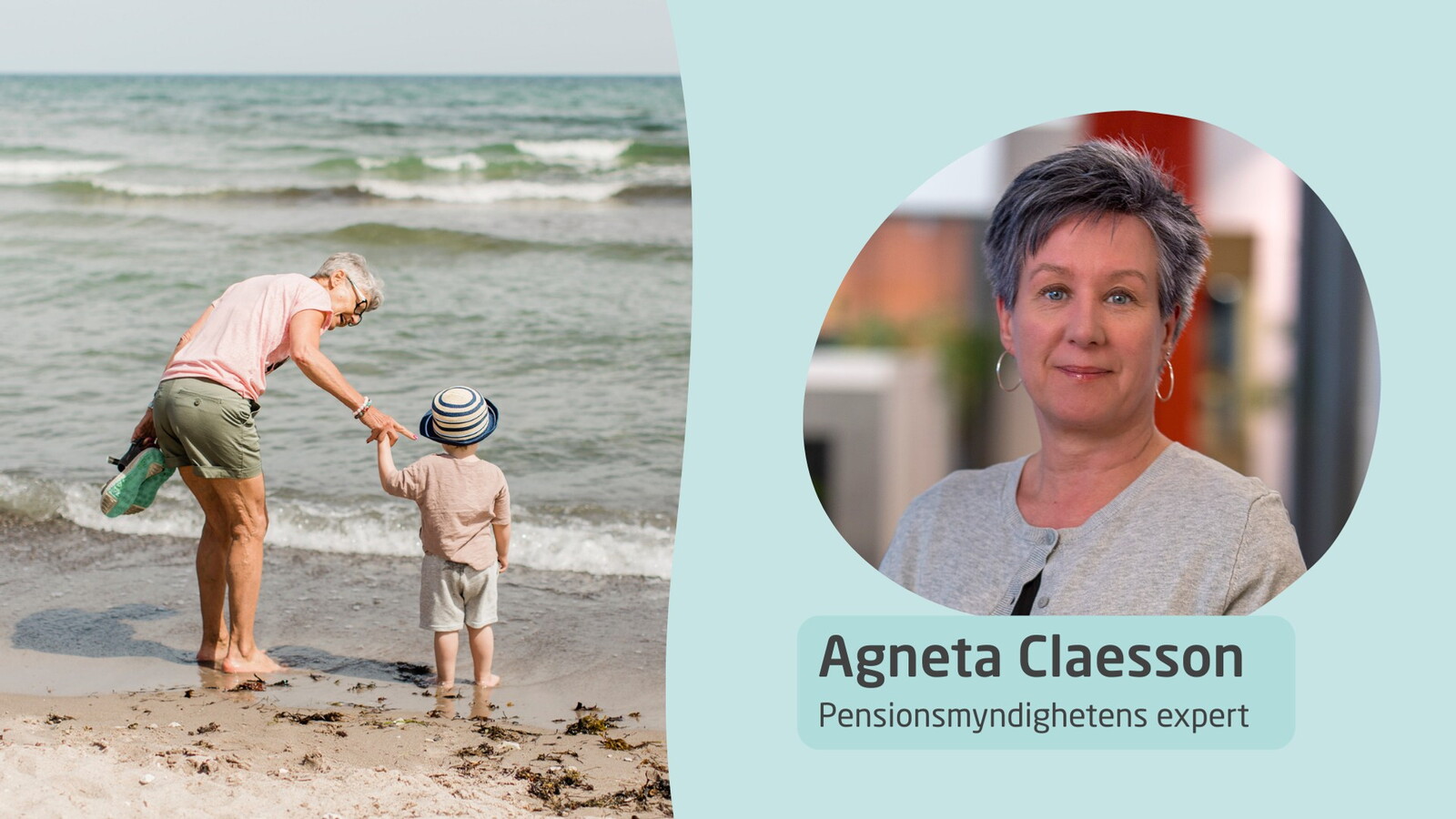
Agneta Claesson works as a pensions specialist at the Swedish Pensions Agency and shares her best advice for those running their own business.
Business owners, just like employees, are entitled to what is known as the state pension. This is the part of your pension that you earn through your declared income – either through a salary from a limited company or the profits of a sole proprietorship or partnership.
“The size of your income is therefore absolutely crucial. It is both employer’s contributions or self‑employed social security contributions, as well as preliminary tax, that determine how much you receive in state pension,” Agneta explains.
With a salary or business profit of SEK 56,050 per month (2026), your contributions to the state pension are maximised.
Certain social insurance benefits, such as sickness benefit and parental benefit, also count towards your pension – but only if they are based on income you have earned from salary or business profits. Dividends from a limited company do not count towards the state pension.
Occupational pension – requires compensation
In addition to the state pension, there is what is known as the occupational pension. This is paid in by the employer, usually as a percentage of salary, and for employees it often makes up a significant part of their total pension. But as a business owner, you have no employer who automatically pays an occupational pension for you, which means you must actively decide how to save and how much.
How much is typically set aside for an occupational pension varies, but a general rule of thumb is between 4.5 and 6 per cent of gross salary. For incomes above roughly SEK 50,000 per month, the contributions are often even higher – sometimes up to 30 per cent.
“That’s a good benchmark to use when planning your savings,” advises Agneta Claesson.
An occupational pension can only be paid for an employee, which means that only business owners with a limited company can choose this form of saving.
Business type makes little difference
When it comes to business structure and whether it affects a business owner’s pension, this is a question the Swedish Pensions Agency is asked quite often. As long as we are talking about the state pension, the answer is no.
“As I mentioned earlier, it is your income that matters most – regardless of whether it comes from a salary in a limited company or the profits of a sole proprietorship,” Agneta Claesson clarifies.
However, the type of business you run can affect which forms of supplementary pension saving you can choose, and how advantageous they are.
Private savings – an important building block
For those running a sole proprietorship, it is, as mentioned, not possible to pay into an occupational pension in the traditional sense, as this requires employment. In that case, so‑called private pension saving is an alternative – and it is also something many limited‑company owners choose to use. This may take the form of an investment savings account, a capital insurance policy, or a dedicated pension insurance plan.
“Some types of savings are tax‑deductible, but it’s important to familiarise yourself with the rules that apply,” Agneta advises.
How much you should save, and which option is most advantageous for you, is individual and something you should understand before choosing a savings method. It is also important to view pension saving as a long‑term commitment earmarked for the future – and to start in good time.
Get a clearer picture of the future
If you want to get an idea of what your own pension might look like, there are useful tools available – and they are free to use. On pensionsmyndigheten.se and minpension.se, you can make a projection and get an overview of your future pension.
“The forecasts are shown in today’s monetary value and assume that you continue to have roughly the same income, with normal salary increases, up until retirement. If your income changes – either up or down – the outcome will of course look different. But the forecasts are still an excellent way to get an overview and plan for the future,” says Agneta Claesson.
Make use of impartial information
On the open market, there are many providers offering services to business owners across a wide range of areas – and pensions are no exception. A final piece of advice is therefore to always be critical of your sources and to make use of the impartial guidance that is available.
“At the Swedish Pensions Agency, you’ll find information and guidance that is both neutral and up to date. We provide specific information for business owners, and the report Saving for a Pension as a Business Owner is published every year. Always consider who is giving you advice – and why,” Agneta concludes.